Comment le coussinet de talon de pneu en PP redéfinit les limites d'efficacité de la fabrication des pneus
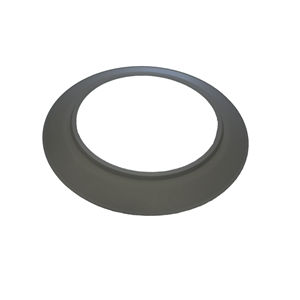
On the logistics channel of the tire factory, it is common to see neatly stacked bead components with smooth black circles between layers. This is the Bead Spacer. For non professionals, it is just a few dollars worth of plastic parts; But in the eyes of process engineers, it is the first line of defense that determines whether the tire will have dddhhhbead hollowingdddhhh or dddhhheccentricitydddhhh. Before the formation of the tire, the steel wire ring and the triangular rubber are in a highly viscous and elastic uncured state. Once interlayer adhesion occurs, it not only destroys the geometric dimensions but also causes significant centrifugal force deviation during high-speed rotation of the vulcanized tire.
Early tire factories attempted to use waxed cardboard or medium density fiberboard as insulation materials, but the results were often disappointing. The cardboard expands in size after absorbing moisture, causing the tire bead to stack and tilt; Fiber board debris is prone to mix with the rubber material, causing secondary pollution. It was not until the emergence of the bead separator that this situation was completely changed. Polypropylene (PP) material inherently has extremely low surface energy, which means that uncured rubber finds it difficult to 'grab' its surface. Through injection molding, the PP tire bead pad can achieve a mirror effect of Ra0.8 μ m or less, allowing the raw tire beads to truly achieve dddhhhtake and separatedddhhh during storage and transportation, without leaving any residual adhesive traces.
However, manufacturing a qualified Chafer Disc is far more complex than imagined. This is not just about dddhhhmelting plastic and pouring it into a molddddhhh. Due to the product being a large-diameter thin-walled component, the most critical challenge is to overcome the dddhhhpost shrinkagedddhhh and dddhhhwarpingdddhhh of PP material.
In terms of production technology, high-end PP bead separators are usually manufactured using precision injection molding and in mold pressure compensation technology. In mold design, in order to avoid unsightly weld marks on the working surface, engineers often use a hot runner needle valve type sprue to feed from the concealed inner wall of the partition. More importantly, the layout of the cooling system - the mold is densely covered with conformal water channels to ensure that the cooling rate of the partition is consistent inside and outside before demolding, preventing warping of the disc surface caused by uneven thermal stress. In addition, special nucleating agents and heat-resistant modifiers will be added to the raw material formula to address the high temperature environment of up to 120 ℃ in the tire factory vulcanization workshop. This will forcibly raise the Vicat softening point to around 145 ℃, ensuring that the partition remains flat and even under high-temperature baking.
In addition to isolation, PP bead separators also play a crucial role in shaping modern tire technology. Especially in the production of all steel radial tires, the apex rubber strip needs to maintain a specific curvature during the cooling and shaping stage. At this point, the side profile of the partition is no longer vertical, but has a precise inclination angle. This product, known as the dddhhhfixed partition,dddhhh actually serves as a cold mold, forcing the rubber molecular chains to rearrange at a set angle, thereby ensuring the rigidity of the tire bead in the finished product.
With the advancement of Industry 4.0, future tire bead separators may also integrate RFID chips to track the production history of each tire bead. But no matter how it evolves, its core mission will not change: to hold the first quality checkpoint in tire manufacturing within a millimeter. For tire companies pursuing zero defects, this small PP plastic sheet is still the most cost-effective process investment.
Changshu Yongchengsheng Hardware Products Co., Ltd. specializes in the production and sales of tire bead separators and PP tire bead pads. If you need them, please contact us at+86-13506249539; Contact email: ljd706627@gmail.com